
6 Questions for Inspirational Women in Marketing — Part 14
We’re continuing our Women in Marketing series by spotlighting incredible leaders making an impact across the industry. From career pivots to leadership lessons, we’ve been sharing the inspirational stories of women in marketing since 2019. These leaders share the experiences and insights that have shaped their journeys, and provide advice for upcoming marketers.
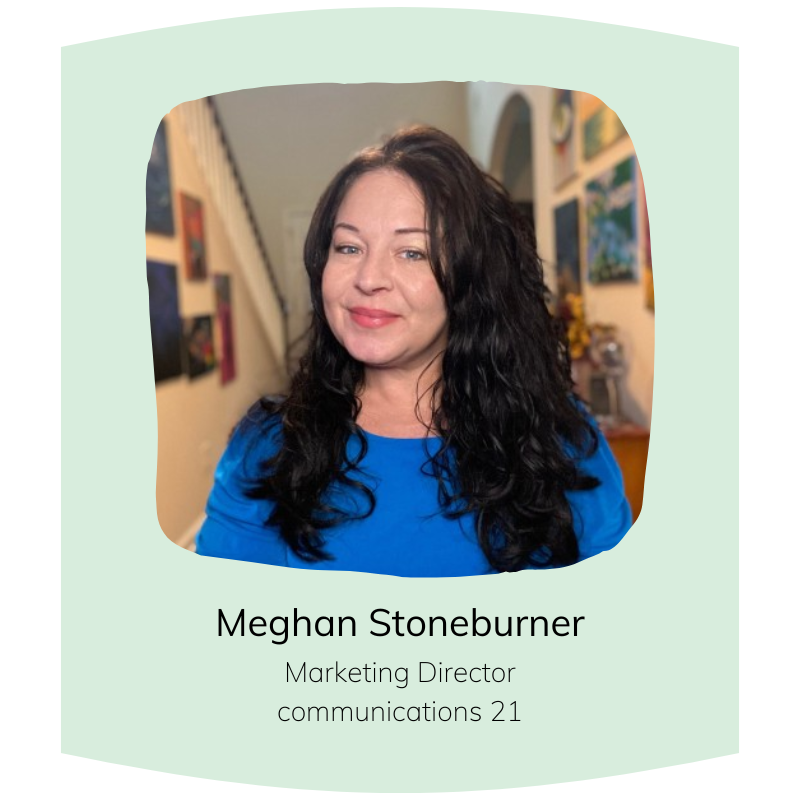
In today’s feature, we are excited to highlight Meghan Stoneburner, the Marketing Director at communications 21, and Andi Welch, the Product Marketing Director at CyberMaxx.

Q1: What inspired you to pursue a career in marketing?
Stoneburner: I was originally an English major minoring in Classical Mythology, with no real career path in sight. At some point, I started looking into the psychology behind marketing, like what makes people click on certain parts of a website, why some people respond to a campaign while others don’t and how colors and fonts can create a feeling. The psychological side of marketing completely fascinated me. Once I realized writing was such a big part of the field, it felt like the perfect fit. I switched my major and found a way to combine my love of writing with my interest in psychology.
Welch: I changed my major three times in college before landing on Marketing. I first chose Psychology because I’ve always been fascinated by the mystery of the human mind—the how and why behind people’s decisions. My next stop was Accounting, driven by my love of numbers and the satisfaction of everything adding up to a clear, definitive answer. Marketing ultimately became the perfect blend of both worlds for me. Every day, I get to tap into my creative side and build content that helps others understand our company’s “how” and “why.” But at the end of the day, I’m still accountable for tracking the metrics that analyze performance and clearly show the impact of our work and how it makes a difference.
Q2: What were pivotal moments in your career that contributed to your success?
Stoneburner: In marketing, it really is about who you know. One of the most pivotal moments in my career actually happened before my career even started. I became friends with my marketing professor at Kennesaw State University, Tyra Burton, and we’ve stayed close ever since. Tyra isn’t just a professor. She’s an author, a podcaster and someone who is incredibly knowledgeable and connected. Through that relationship, I learned the ins and outs of the marketing industry in ways that would have taken me years to figure out on my own.
Another important moment came a few years ago, when I was working as a freelancer. I made a conscious decision to seek out women-owned, minority-owned and queer-owned businesses so I could use my skills to support companies that may not always have the same opportunities or resources. That eventually led me to my current position at communications 21, a woman-owned marketing and PR agency, where about 95% of our employees are also women. It’s been incredibly rewarding to work in an environment like that.
Welch: I went through a stretch of back-to-back layoffs from cybersecurity startups that really forced me to pause and reevaluate my path. Even though none of them were tied to my performance, they were tough hits. But they also became unexpected catalysts. From there, I stepped into a role that ultimately wasn’t aligned with my long-term goals but it turned out to be one of the most clarifying experiences of my career. It showed me exactly what I do love doing, the environments where I thrive, and the kinds of leaders and teammates who bring out my best. It helped me identify my true zone of excellence with absolute clarity. The journey wasn’t easy, and it certainly wasn’t short, but every challenge built a level of confidence, resilience, and self-awareness that has fueled real growth. And standing where I am now, I can see how each step directly contributed to the success I’m experiencing today.
Q3: Who helped shape your path to leadership?
Stoneburner: Tyra Burton definitely played a huge role, but so has my current boss, Sharon Goldmacher. She’s constantly encouraging our team and me to grow and improve, and she genuinely wants to see her employees succeed in their careers. That kind of leadership has pushed me to grow not only as a marketer but as a person.
Welch: Over the past few years, mentorship has been at the core of my leadership journey. I’ve grown through the guidance of a mentor who supported me through some of my most challenging decisions, and I’ve also had the privilege of mentoring students in our local Entrepreneurship Innovation Campus program. During a period of uncertainty—when I was searching for direction in my career and working through a heavy dose of imposter syndrome—my mentor showed up consistently. Their encouragement, resources, and network of human connections didn’t just help me move forward; they shaped me into a stronger, more grounded leader. On the other side of that, giving back as a mentor has been equally transformative. Working with student entrepreneurs is energizing and humbling; I often walk away realizing I’ve learned just as much as I’ve shared. Each conversation gives me new perspective and reinforces the type of leader I want to be. I’m a firm believer that everyone should have a mentor and everyone should be a mentor. Both sides of the relationship are incredibly powerful, and together they’ve been a defining force in my growth.
Q4: Are there challenges you’ve faced as a woman in marketing, and how did you navigate them?
Stoneburner: I’ve definitely encountered some sexism along the way. Men have interviewed me and asked questions about being a mother and how that might affect my ability to do my job. I doubt they asked men the same questions. Experiences like that are frustrating, but they also strengthened my desire to work with companies and teams that value women and their contributions.
Welch: One of my biggest challenges over the past few years has been overcoming Imposter Syndrome. It’s certainly not an issue unique to women, but for me, it became especially loud as I stepped into roles that pushed me to grow as a corporate leader. I found myself questioning whether I truly belonged at the table and whether I was capable of the responsibilities I had earned. Deep down, I knew I was but external circumstances amplified that inner voice whispering that I wasn’t enough or that failure was inevitable. I felt stuck, unsure how to break through to the next level. With the help of my mentor, I leaned into the right resources, worked through meaningful exercises, and took intentional steps that brought everything into clearer perspective. That process helped me uncover—and dismantle—the limiting beliefs that were standing in my way. Through this work, the support of a mentor who believed in me, and a shift into a role that aligns perfectly with my zone of genius, I’ve moved beyond that old mindset. Today, I’m embracing leadership opportunities with confidence and thriving in a job that energizes and fulfills me.
Q5: What advice would you give to the next generation of women marketers?
Stoneburner: Network, network, network. Seriously. The more people who know your name and know what you’re good at, the better. Join groups, attend events and connect with people in your industry. For example, the Marketing & Communications Women in Atlanta Facebook group is a great place to meet people and stay connected to the community.
Welch: The next generation of women marketers is stepping into one of the most exciting and unpredictable eras our industry has ever seen. With AI accelerating at lightning speed and hybrid work reshaping how teams connect and create, the future of marketing is anything but static. Honestly, who knows what the landscape will look like ten years from now? That’s what makes it thrilling. But while the tools and channels may evolve, some advice will always hold true:
Ask for help—early and often. The strongest marketers aren’t the ones who know everything; they’re the ones who stay curious and seek out perspectives that make their work better.
Share bold ideas—even the weird ones. The concepts that feel “too out there” are often the ones that spark breakthrough thinking. Creativity loves courage.
Communicate relentlessly. In a world of distributed teams and constant change, clarity is a superpower. Overcommunication beats miscommunication every single time.
Whatever you do, don’t be boring. Marketing should feel alive. At its core, it’s a conversation between humans. Bring personality. Bring energy. Be real. Robots are for automation—not for brand storytelling.
Q6: What emerging marketing trend excites you right now?
Stoneburner: I’m still completely sold on video. It’s astonishing how a simple 30-second video can influence someone to buy an event ticket, sign up for a newsletter, or purchase a product. Thirty seconds of text on a page just doesn’t have the same impact. Video captures attention, tells a story quickly, and creates an emotional connection and that’s not a trend that’s going away anytime soon.
Welch:In our industry, marketing through the channel isn’t a trend, it’s the foundation of how we go to market. For our organization, it’s a relatively new approach, and we’ve fully embraced a channel-first mindset. That shift has made the work genuinely exciting. I now get to build marketing from two perspectives at once: the partner point of view and the customer point of view. I challenge myself to step into both mindsets every single day. With each new asset or campaign, I start by asking: Who exactly are we speaking to, and what motivates them? When you understand that, you can create content that truly resonates and delivers impact.
No path into marketing is ever the same, but each leader who shares their story demonstrates resilience, determination, and, through that, success. These leaders have leaned into curiosity, creativity, and uncertainty, overcoming career pivots and imposter syndrome to build strong networks and find environments that align with their values and grow in this industry.
As marketing continues to evolve with new technologies, changing expectations, and faster ways to connect, the human elements remain constant. Confidence, communication, and community will always be at the core of meaningful work.
To the next generation of women in marketing: stay curious, speak up, and don’t be afraid to take up space. And to the leaders already shaping the industry, thank you for paving the way and continuing to lift others as you grow.





Setup CEO + Founder, Joe Koufman, sat down with Meredith Winczewski, the Chief Marketing Officer for Honeywell, to talk about authentic leadership, the value of listening, why marketers should not be afraid of lateral career moves, the importance of digging into data, and how AI is helping make complex marketing work more efficient.